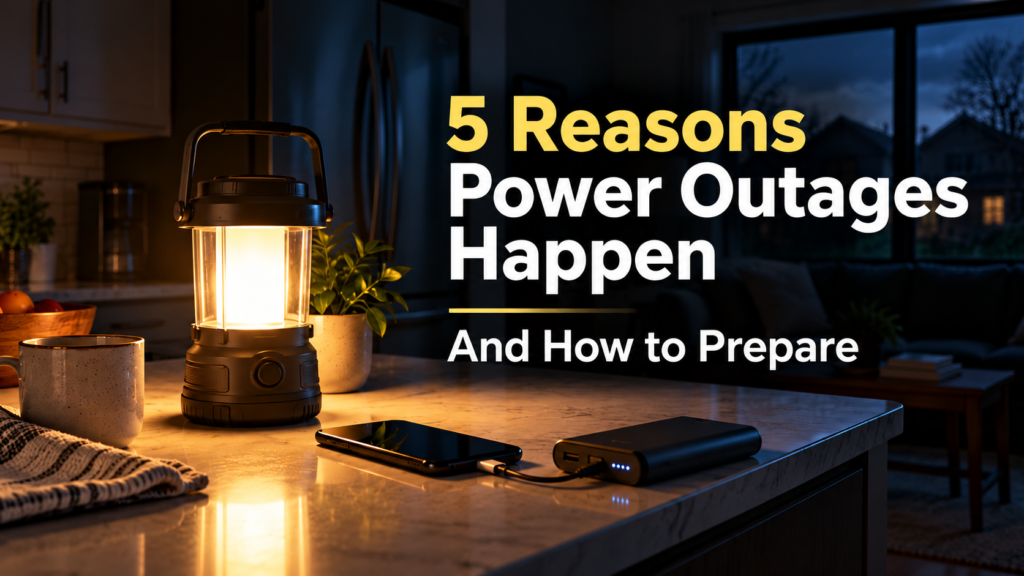
5 Reasons Power Outages Happen (And How to Prepare)
From severe storms to equipment failures, understanding why electricity goes out can help you protect your home and prepare for unexpected disruptions.
You’re preparing dinner, watching television, or working on your computer when suddenly everything goes dark. The lights turn off, the Wi-Fi disappears, and you’re left wondering what happened and when the electricity will return.
Power outages are a familiar inconvenience, but most people don’t think much about how electricity reaches their homes until it stops working. While some outages last only minutes, others can stretch into hours or days, affecting everything from refrigerated food to communication and home comfort. Understanding what causes these disruptions—and knowing what to do when they happen—can make a real difference.
How Does Electricity Get to Your Home?
Electricity reaches your home through an extensive network known as the power grid. Power plants and other generating facilities produce electricity using sources such as natural gas, nuclear energy, water, wind, and sunlight. High-voltage transmission lines carry that electricity across long distances, while substations, transformers, and local distribution lines deliver it to neighborhoods and individual homes.
Because electricity depends on several connected systems, an interruption can happen at different points along the way. A damaged transformer might affect a few homes, while a major storm damaging multiple power lines could leave an entire community without service. This also explains why your neighbor may still have electricity even when your home is dark. Nearby houses aren’t always connected to the same electrical circuits or distribution equipment.
5 Common Reasons Power Outages Happen
1. Severe Weather
Weather is one of the biggest causes of major electricity interruptions. Strong winds can bring down power lines, lightning can damage equipment, and heavy snow or ice can cause branches and electrical infrastructure to fail. Hurricanes and flooding can create widespread damage that takes utility crews considerable time to repair.
Extreme temperatures can also affect electricity service. During heat waves, increased air-conditioning use raises demand, while severe cold can interfere with generating equipment and fuel supplies. Although utilities prepare for changing weather conditions, unusually severe events can overwhelm parts of the system.
2. Electrical Equipment Failures
Electricity travels through transformers, substations, cables, and other equipment before reaching your home. When these components malfunction, the customers they serve may temporarily lose power.
Equipment failures can occur because of wear, environmental conditions, manufacturing defects, or unexpected technical problems. Some interruptions affect only a small area, while failures involving major equipment can disrupt service across a much larger region. Regular maintenance and infrastructure upgrades help utilities reduce these risks, but no electrical system is completely immune to failure.
3. Fallen Trees and Overgrown Vegetation
Trees are another common reason electricity service gets interrupted. Branches that grow too close to overhead wires can cause problems, and falling trees may damage poles, transformers, or power lines. These incidents are especially common during storms, but vegetation-related outages can also happen during otherwise calm weather.
Utilities often maintain clearance around electrical lines through vegetation management programs. Homeowners should report trees that appear to threaten power lines rather than attempting to trim them. Working near electrical equipment is dangerous and should be left to qualified professionals.
4. Accidents and Construction Damage
Not every outage is caused by weather or equipment problems. Vehicle collisions involving utility poles, construction activity, and accidental damage to underground electrical cables can interrupt service to nearby homes and businesses.
Digging without knowing where underground utilities are located is particularly risky. Before starting a project involving excavation, homeowners and contractors should contact 811 to request utility markings. This simple precaution can help prevent damage, injuries, and unnecessary service interruptions.
5. High Electricity Demand and Supply Shortages
Electricity providers must continuously balance the amount of electricity generated with the amount consumers use. During extreme heat or cold, demand may rise significantly as households and businesses increase heating or air-conditioning use.
When available electricity supplies become insufficient, grid operators may occasionally implement controlled power interruptions to protect the larger system. These situations are different from outages caused by physical damage to neighborhood equipment. High demand alone doesn’t automatically cause a blackout, but sufficient generation, transmission capacity, and planning are essential to maintaining reliable electricity service.
What Should You Do When the Power Goes Out?
The first step is to determine whether the outage affects only your home or a larger area. Look outside to see whether neighboring homes or streetlights have electricity. If other properties have power, check your circuit breaker if it is safe to do so. Never touch damaged wiring or electrical equipment, and stay away from fallen power lines.
Next, check your utility provider’s outage map or notification service. Many electricity companies allow customers to report outages online or receive text updates about restoration progress. Keep your phone charged whenever possible, and use a portable power bank if you have one.
If the outage continues, unplug sensitive electronics to reduce the risk of damage from electrical surges when service returns. Leave one light switched on so you’ll know when electricity has been restored. Use flashlights or battery-powered lanterns instead of candles, and avoid unnecessary refrigerator and freezer openings.
Food safety is especially important during longer interruptions. According to the U.S. Department of Agriculture, an unopened refrigerator generally keeps food safe for about four hours without electricity. A full freezer can maintain safe temperatures for approximately 48 hours, while a half-full freezer may last about 24 hours if the door remains closed. When an outage extends beyond these periods, follow USDA guidance to determine which foods should be discarded.
Why Do Some Outages Last Longer Than Others?
The length of an outage depends on the cause, the location of the damage, and how quickly crews can safely make repairs. A localized transformer problem may be resolved relatively quickly, while a major storm can require utility workers to replace poles, repair several damaged lines, and clear fallen trees.
Restoration may also occur in stages. Utilities often prioritize hazardous situations, critical facilities, and repairs that restore electricity to larger numbers of customers. This means some neighborhoods may regain power before others, even when they were affected by the same weather event.
Having access to your utility’s outage notifications can help you plan around delays, although estimated restoration times may change as crews assess the situation.
How Can You Better Prepare Your Household?
Preparing for an outage doesn’t necessarily require purchasing expensive equipment. Start with essentials such as rechargeable flashlights, battery-powered lanterns, portable phone chargers, and a battery-powered or hand-crank emergency radio. Keep these items in an accessible location and check them periodically to make sure they’re ready to use.
If you work from home, an uninterruptible power supply (UPS) can provide temporary electricity for compatible devices, giving you time to save your work and safely shut down a computer. A UPS may also keep networking equipment operating briefly, although internet access still depends on your service provider’s infrastructure.
Households that experience frequent or extended outages may want to consider portable power stations or backup generators. Portable battery systems can power selected devices without producing exhaust during use, while fuel-powered generators may support larger electrical loads, depending on their capacity.
Safety matters when using backup equipment. Fuel-powered generators must always operate outdoors, well away from doors, windows, and vents because they produce deadly carbon monoxide. Never connect a generator directly to household wiring without the proper professionally installed transfer equipment.
Before buying backup power equipment, think about which appliances are essential, how much electricity they require, and how long you would need them to operate. A phone charger and a refrigerator have very different energy requirements, and not every backup system can support both for an extended period.
For a closer look at the available options, explore our companion guide, Portable Power Station vs. Generator: Which Backup Option Does Your Home Really Need?
Final Thoughts
Power outages are unpredictable, but being prepared doesn’t have to be complicated. Understanding the most common causes, knowing how to check for utility updates, and keeping essential supplies available can help you manage an interruption with less disruption to your daily life.
You may not be able to prevent the next outage, but a few practical decisions today can make your household better prepared when the lights go out.