
You handed it back. You got your refund. But your product’s journey may have just started.
You order a pair of shoes online.
They arrive.
Wrong size.
You put them back in the box, print the label—or increasingly, don’t even need a box—and drop them off.
A few days later:
Transaction over.
At least for you.
But here’s a question most of us probably don’t think about:
It’s easy to assume they simply travel backward through the system and eventually appear on the shelf again.
Sometimes they do.
But that’s only one possible destination.
HOW DOES THAT ACTUALLY WORK?
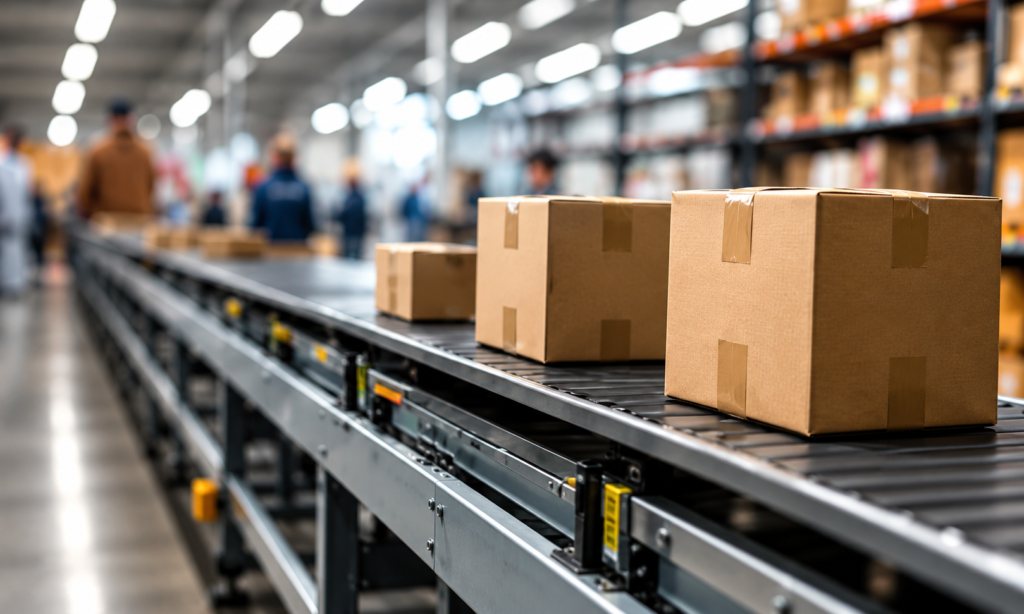
Retail has an entire system for dealing with products traveling in the opposite direction.
It’s called reverse logistics.
Normal retail logistics looks something like this:
Reverse logistics starts going the other way:
And that question mark is where things get interesting.
Because once you’ve returned something, someone has to decide:
That’s a very different question from:
What did the customer pay for it?
WAIT — $850 BILLION?
Returns aren’t some little corner of retail.
Online shopping makes the issue even bigger, with a significant share of online purchases being returned.
That means retailers aren’t just running businesses designed to get products to us.
Behind the scenes, they also need an enormous system designed to deal with products coming back.
And returning something to a store doesn’t necessarily mean it stays at that store.
Returned merchandise can move through collection points, consolidation facilities, warehouses and specialized returns operations before its fate is determined.
SO WHAT HAPPENS TO YOUR RETURN?
One of the first things that may happen is surprisingly ordinary.
Someone looks at it.
The item may be inspected and graded based on its condition.
From there, several paths are possible.
Best-case scenario.
The item is unused.
Packaging is intact.
Everything is there.
It can potentially return to normal inventory and be sold again.
Imagine returning headphones.
The headphones work perfectly.
But you’ve opened the packaging, removed the protective film, torn the box, or unwrapped the accessories.
The product still works.
But selling it again as brand new may no longer make sense.
This is where returned merchandise can disappear from the retailer you recognize and reappear somewhere you don’t.
Depending on the retailer and product, returns may be:
Resold as used
Liquidated
Bundled with other merchandise
Sold through secondary channels
So that item sitting on a discount site or in a liquidation operation?
Its previous life may have been much more ordinary than you’d expect.
It might simply have been someone else’s return.
HERE’S THE PART I FIND MOST INTERESTING
We tend to think the important question is:
But that’s not necessarily the question that determines what happens next.
The business question can be:
Because every additional step costs something.
And while all of that is happening, the product itself may be losing value.
A seasonal item can become less desirable.
Technology can become outdated.
Fashion changes.
Packaging gets damaged.
A lower-value item may simply not justify an expensive recovery process.
AND THEN THERE’S THE LAST PATH
Not everything finds another buyer.
Some products can’t economically or practically be resold.
They may be damaged.
Incomplete.
Unsafe.
Too costly to repair.
Or simply not worth processing further.
And that’s what makes the whole system more complicated than it appears from the customer side.
↓
OPEN-BOX / RETURNED INVENTORY
↓
REFURBISHED
↓
SECONDARY-MARKET MERCHANDISE
↓
PARTS / RECYCLED MATERIAL
↓
DISPOSAL
And sometimes the difference between those paths isn’t simply whether the product works.
THE NEXT TIME YOU RETURN SOMETHING…
Watch what happens.
You hand over the item.
Someone scans a barcode.
Your card gets refunded.
You walk away.
From your perspective, the transaction just ended.
But somewhere behind that counter is a completely different supply chain running in reverse.
The things adults often aren’t taught, don’t know to ask about, or discover too late.