
Many professionals reach a moment when something inside them says: it’s time to move on.
Yet even when that feeling becomes persistent, people often remain where they are.
Career decisions are rarely simple. Stability, income, relationships with colleagues, and uncertainty about the future can make change feel risky. However, staying in the wrong environment for too long can quietly stall professional growth and limit long-term opportunities.
If you find yourself questioning whether it’s time to make a move, these signs often indicate that a transition may be necessary for continued career development.
One of the clearest signals that it may be time to move on is when you are no longer learning anything new.
Early in most roles, there is a period of rapid development. You gain new skills, solve new problems, and expand your professional capabilities. Over time, however, some roles become repetitive. When your daily responsibilities no longer challenge you or expand your skill set, your professional growth may begin to plateau.
A healthy career should involve continuous development. If your environment no longer supports that growth, it may be worth exploring new opportunities that push you forward.
Sometimes the issue is not the job itself but the structure of the organization.
You may be performing well, delivering strong results, and demonstrating leadership potential. However, if the organizational structure offers few advancement opportunities—or if promotions rarely occur—your career trajectory may remain stagnant.
Many professionals stay in these situations out of loyalty or comfort, but long-term career growth often requires moving to environments where advancement is realistically possible.
Career paths evolve over time. What once seemed like the perfect role may no longer align with your evolving goals, interests, or professional vision.
For example, you may have initially accepted a role to gain experience, but your long-term ambitions may now require:
broader leadership responsibilities
more strategic work
exposure to new industries or technologies
When your current role no longer supports your long-term direction, it may be time to reassess whether staying serves your future.
Everyone experiences occasional frustration at work. However, persistent disengagement is different.
Signs of disengagement often include:
lack of motivation
minimal enthusiasm for new projects
feeling mentally checked out during the workday
When these feelings become constant rather than occasional, they may indicate that the role no longer provides the intellectual or professional stimulation you need.
A fulfilling career should create a sense of purpose and engagement. If that connection has disappeared, a change may be necessary.
Another important indicator is when your skills and contributions are consistently underutilized.
This can occur when organizations fail to recognize potential or when leadership structures limit the ability to take on new responsibilities. Over time, this can lead to frustration, especially when you know you are capable of delivering more value.
Professionals thrive in environments where their expertise is recognized and where they have opportunities to contribute meaningfully. When those opportunities are absent, growth becomes difficult.
Workplace culture plays a significant role in professional development.
Even high performers can struggle to grow in environments that lack:
collaboration
innovation
ethical leadership
openness to new ideas
When the culture discourages progress or change, employees often find themselves working harder simply to maintain the status quo.
A supportive culture should encourage creativity, professional development, and forward thinking. Without that foundation, career growth may become increasingly limited.
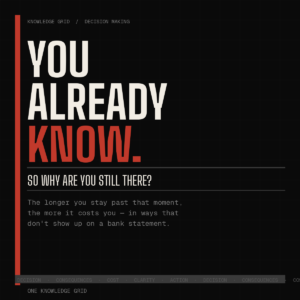
Perhaps the most telling sign is the one that is hardest to quantify.
Many professionals simply know when it’s time to leave.
They sense that their career has reached a natural transition point. Yet they hesitate because change involves uncertainty.
While careful planning is always important, ignoring this internal signal for too long can delay opportunities that might significantly advance your career.
Sometimes growth requires stepping outside of familiarity and embracing the next stage of your professional journey.
Leaving a job should never be an impulsive decision. Strategic transitions involve careful planning, financial preparation, and thoughtful evaluation of future opportunities.
However, remaining in a role that no longer supports growth can quietly limit your potential.
Recognizing the signs early allows you to approach career transitions with clarity and intention. By seeking environments that challenge you, value your contributions, and align with your long-term goals, you position yourself for continued development and success.
Career growth rarely happens by accident. Often, it begins with the decision to move forward.